Saltar al contenido
  Spanish
  English
When your customers expect fresh flavor, bright color, and weeks more shelf life, a máquina de envasado en atmósfera modificada becomes one of the most strategic pieces of equipment on your line. Instead of simply sealing a tray, MAP packaging equipment replaces the air inside with a precisely mixed protective gas, then seals the package before oxygen and microbes can undo your product quality.
In this guide, you will learn what MAP is, how the equipment works, which gas recipes match which foods, and how to choose the right machine for your production volume. If you are evaluating your first MAP investment, this post gives your procurement team the decision framework you need.
| See DJPACK Modified Atmosphere Packaging Machines Compare tabletop, semi-automatic, and automatic MAP tray sealers built for fresh food production. |
What Is Modified Atmosphere Packaging (MAP)?
Definition
At its core, modified atmosphere packaging is a preservation technique that changes the gas composition inside a sealed food package. A MAP packaging machine flushes out ordinary air and replaces it with a protective blend of gases—most commonly carbon dioxide, nitrogen, and sometimes oxygen. The result is a package that slows microbial growth, limits oxidation, and keeps food looking and tasting fresh longer.
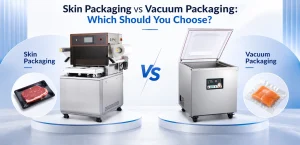
MAP is different from vacuum packaging. A vacuum machine removes nearly all air, while MAP equipment deliberately manages the gas mix. That deliberate control is what lets you keep delicate textures—think leafy salads, soft baked goods, or sliced deli meats—from collapsing under vacuum pressure.
Goal
The main goal of MAP is shelf-life extension without heavy reliance on preservatives. For your business, that translates into fewer returns, longer distribution windows, better retail presentation, and the ability to reach wider markets. In chilled supply chains, MAP can add days—or even weeks—to the usable life of perishables, giving you more flexibility in production planning and logistics.
Common Gases — CO2, N2, and O2
Three gases do most of the work in a MAP system:
- Carbon dioxide (CO2) suppresses bacteria and mold growth. High CO2 levels are common in meat, poultry, and seafood.
- Nitrogen (N2) is an inert filler. It prevents the package from collapsing and displaces oxygen to slow oxidation.
- Oxygen (O2) is used selectively. In red meat, a controlled oxygen level preserves the bright cherry-red color consumers associate with freshness.
How Does a MAP Packaging Machine Work?
Modern MAP packaging equipment follows a clear sequence, whether you run a tabletop unit or an automatic inline line:
- Tray loading: pre-formed trays or cups are placed on the indexing conveyor or tooling nest.
- Product filling: your operator or upstream line deposits the food portion into each tray.
- Gas flushing: the machine draws a soft vacuum and injects the programmed gas mixture, displacing ambient air.
- Heat sealing: a high-barrier top film is heat-sealed to the tray flange.
- Cutting and discharge: excess film is trimmed and sealed trays exit for labeling, weighing, and case packing.
Throughout the cycle, sensors monitor vacuum level, gas flow, and seal temperature. Programmable recipes let your team switch from, for example, a high-N2 bakery mix to a high-CO2 seafood mix with only a few taps on the control panel.
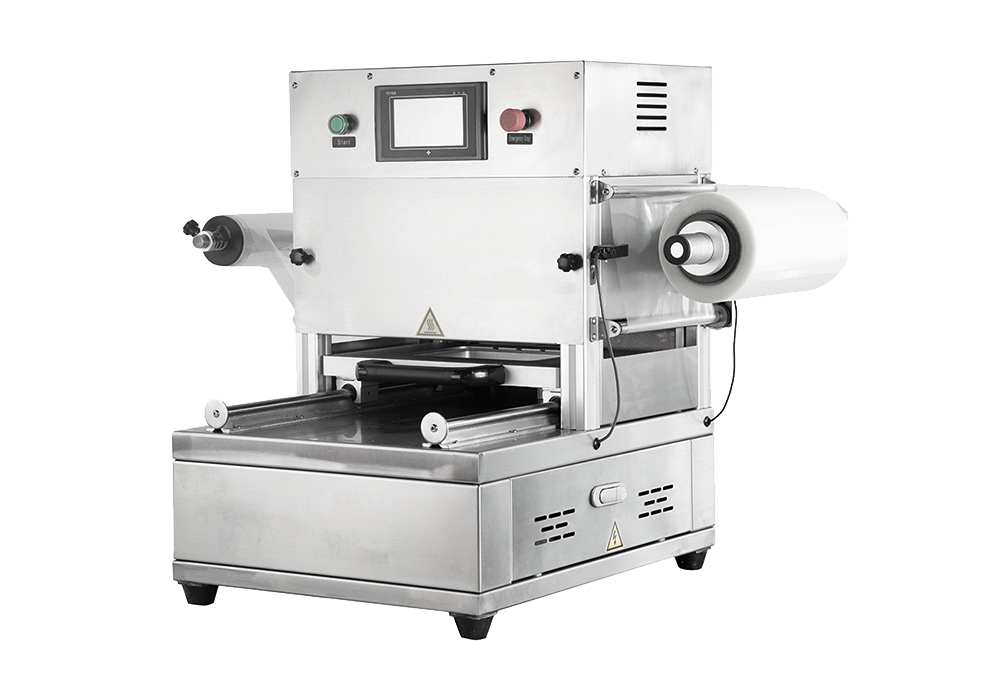
| Ready to Add Shelf Life to Your Line? Explore MAP packaging equipment built for meat, seafood, ready meals, produce, and bakery applications. |
What Gas Mixtures Are Used in MAP?
There is no single best gas recipe. The ideal mixture depends on product pH, water activity, fat content, and target shelf life. Below is a quick reference for the three gases most commonly used in modified atmosphere packaging equipment.
| Gas | Primary Function | Typical Range | Key Notes |
|---|---|---|---|
| Carbon dioxide (CO2) | Anti-microbial agent | 20–100% | Suppresses bacteria and mold; can dissolve in moisture and slightly collapse the tray if not balanced with N2. |
| Nitrogen (N2) | Inert filler / package support | 0–90% | Displaces oxygen and prevents CO2 from drawing the film inward. |
| Oxygen (O2) | Color retention / respiration aid | 0–80% | Maintains red-meat color; too much accelerates oxidation in most other chilled foods. |
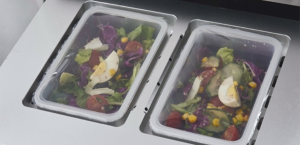
Food-specific recipes combine these bases. For example, red meat often runs roughly 70% O2 / 20% CO2 / 10% N2; processed meat may shift toward 30% CO2 / 70% N2; and fresh-cut salads may use a low-O2 balance that slows respiration without triggering anaerobic spoilage.
What Types of MAP Machines Are There?
MAP packaging equipment is usually grouped by automation level and sealing motion. Your choice depends on throughput, labor cost, tray-format flexibility, and available floor space.
- Tabletop / manual MAP machines: the operator loads trays, closes the chamber, and starts the cycle. Best for R&D kitchens, startups, seasonal SKUs, or volumes below roughly 500 trays per day.
- Semi-automatic vertical MAP tray sealers: faster than tabletop units, with powered gas flushing and sealing. The operator still loads and unloads trays. This tier is a common upgrade for small-to-medium producers scaling toward a few thousand trays daily. A typical example is a semi-automatic MAP tray sealer.
- Automatic inline MAP tray sealing machines: continuous-motion systems that integrate with automatic filling, labeling, and weighing. They suit high-volume lines where labor per tray must be minimized. A good reference point is an automatic MAP tray sealing machine.
If your product mix changes frequently, prioritize machines with quick-change tooling and recipe memory. If you run one tray format at high speed, favor throughput and line integration.
What Foods Use MAP Packaging?
Almost any chilled perishable can benefit from map food packaging, but these categories are the strongest commercial use cases:
- Fresh red meat: high-O2 MAP keeps color vivid for 5–10 days.
- Poultry and seafood: high-CO2 mixes slow spoilage bacteria. If seafood is your focus, read more about seafood MAP packaging.
- Ready-to-eat meals: extends safe retail life without freezing.
- Fresh pasta and bakery: N2-rich mixes prevent staling and package collapse.
- Fresh-cut fruits and vegetables: balanced low-O2 / high-N2 atmospheres slow respiration and browning.
- Cereals, coffee, and snacks: high N2 displaces oxygen to preserve crunch and aroma. See how MAP applies to dry goods in this MAP solution for cereal products.

How to Choose a Modified Atmosphere Packaging Machine
A bad fit costs more in downtime than it saves in purchase price. Use this checklist when you evaluate MAP packaging equipment for your line:
- Match throughput to your daily volume, not your peak week. An oversized machine wastes capital; an undersized one becomes a bottleneck.
- Check tray-format flexibility: can the tooling accept your tray dimensions, depth, and flange shape? Many suppliers build custom tooling, so sending sample trays and films before ordering is standard practice.
- Demand recipe memory and precise gas-mix controls. You will need different recipes for meat, seafood, produce, and bakery.
- Look for food-grade materials and certified electrical systems. Stainless-steel contact parts and CE/ISO-compliant controls are baseline expectations for food-processing equipment.
- Ask about barrier film and tray compatibility. High-barrier materials are essential; a great machine cannot compensate for permeable packaging.
- Plan for spare parts and service reach in your region. Fast access to seals, heating elements, and gas-mixing valves keeps uptime high.
Not sure which MAP machine tier fits your line?
Choose a tabletop / manual MAP machine if: you run R&D batches, seasonal SKUs, or fewer than 500 trays per day.
Choose a semi-automatic MAP tray sealer if: you produce 500–3,000 trays daily and want faster cycle times without full automation.
Choose an automatic MAP tray sealing machine if: you run 3,000+ trays daily, need line integration, and want minimal labor per tray.
| Need Help Specifying the Right MAP Machine? Tell us your tray size, daily volume, and target gas mix. We will point you toward the right MAP equipment for your line. |
MAP vs Vacuum Packaging: Which Lasts Longer?
The honest answer: it depends on what you pack. Each method has a different preservation mechanism and a different best-use case.
| Factor | Modified Atmosphere Packaging (MAP) | Envasado al vacío |
|---|---|---|
| Best for | Chilled retail display, color-sensitive foods, delicate textures | Frozen goods, hard cheese, products where tight film is acceptable |
| Air handling | Replaces air with a tailored gas mix | Removes most air |
| Shelf-life driver | Controlled CO2, N2, and O2 levels | Oxygen removal |
| Retail appearance | Tray keeps natural shape and color | Film conforms tightly to product |
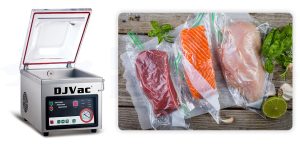
In most chilled retail cases, MAP gives a longer display life because it balances safety and appearance. Vacuum packaging often gives a longer frozen life. To decide between them for a specific product, weigh your priorities—color and shape versus tight cost and frozen storage. For the full comparison, read our guide on what is a vacuum packaging machine.
FAQs
What Is MAP Packaging in Simple Terms?
What is MAP packaging? In simple terms, it is the practice of swapping the normal air inside a food package for a protective gas blend. A MAP machine does the swap and seals the pack. The blend slows bacteria and preserves color and texture, so your product stays saleable longer without extra preservatives.
What Gases Are Used in a Modified Atmosphere Packaging Machine, and What Do They Do?
Three gases do the work. Carbon dioxide (CO2) slows bacteria and mold. Nitrogen (N2) is an inert filler that holds the package shape and pushes oxygen out. Oxygen (O2) is added only when needed—mainly to keep red meat red. Your machine mixes these in programmable ratios per recipe.
How Long Does MAP Food Last Compared With Vacuum Packaging?
For chilled retail display, MAP usually wins on display life because it preserves color, shape, and texture. For frozen storage, vacuum packaging often wins because removing air is enough when temperature does the heavy lifting. The right choice depends on your cold chain and how the product is sold.
What Packaging Materials (Tray and Film) Does MAP Require?
MAP demands high-barrier materials. You need trays and top film with very low oxygen transmission rate (OTR) and water vapor transmission rate (WVTR)—commonly PET/PE, PP, or EVOH-laminated structures. Ordinary cling film will not hold the gas. Pair the machine with the correct barrier spec, or the mix leaks and shelf life collapses.
How Much Does a MAP Packaging Machine Cost for a Small or Mid-Size Food Business?
Pricing scales with automation. A manual tabletop MAP unit costs a fraction of a semi-automatic sealer, which in turn is far below a fully automatic inline system. Beyond the sticker price, budget for tooling, barrier film, gas supply (cylinder or generator), and spare parts. Size the spend against trays-per-day, not features you will not use.
Can One MAP Machine Run Both Trays and Pouches, and Multiple Gas Recipes?
Many modern MAP machines handle both rigid trays and flexible pouches if the tooling and film path support both. Multiple gas recipes are standard—most machines store dozens of recipes you switch by product. Confirm tray-size changeover time and whether recipes are access-controlled for your line operators.
Is MAP Packaging Food-Safe and Regulation-Compliant?
Yes, when built and operated correctly. The gases used (CO2, N2, O2) are food-grade, and the packaging must meet food-contact regulations such as EU 1935/2004, US FDA 21 CFR, or China GB 4806 depending on your market. Choose equipment with food-grade stainless-steel contact parts and documented CE/ISO compliance, and validate your process under your HACCP or ISO 22000 plan.
Conclusión
MAP is not just a packaging method; it is a supply-chain tool that protects flavor, color, and shelf life. By controlling the gas inside every tray, your business reduces waste, expands distribution reach, and gives retail buyers a fresher-looking product. If you also run bone-in or irregular cuts, vacuum skin packaging is worth evaluating alongside MAP—see the skin packaging machine working principle to understand how it differs.