Skip to content
  English
  Spanish
When you add a vacuum skin packaging machine to your line, the product you ship looks the same on the retail shelf as it did on your cutting table — no float, no slack film, no leakage. But before you compare quotes, it helps to understand exactly how the machine turns a flat sheet of film into a second skin around your product. This guide breaks down the skin packaging machine working principle in plain language, walks through every step of the cycle, names the parts that do the real work, and explains why the film grips so tightly.
What Is A Skin Packaging Machine?
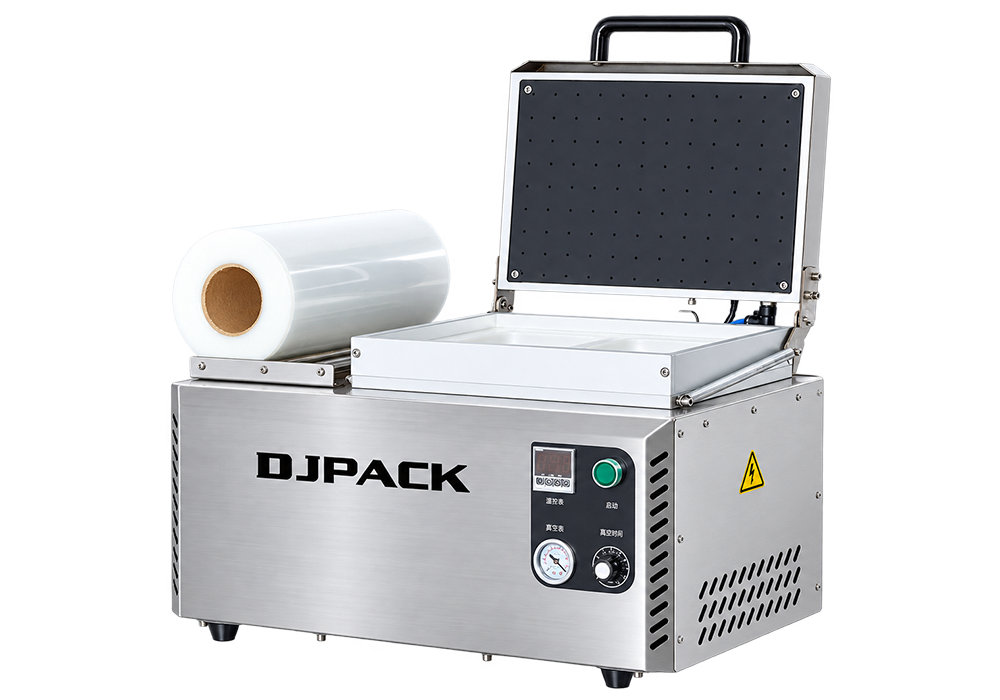
A skin packaging machine is a form-and-seal system that wraps a product in a single layer of heated plastic film and bonds that film directly to a rigid base — usually a printed card, a plastic tray, or a backing board. Once the cycle finishes, the film hugs every contour of the item like a second skin, which is exactly where the name comes from. You will also see the same equipment called a skin pack machine, a vacuum skin pack machine, or a vacuum skin packaging system depending on the region and the catalog.
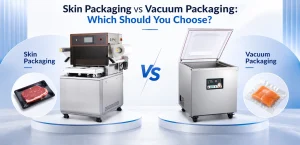
The key difference from a standard vacuum chamber sealer is what happens to the film. A chamber machine sucks air out of a pre-made bag and seals the open end; the bag stays loose around the product. A skin pack machine heats the film until it is soft, pulls it tight with vacuum, and fuses it to the base around the product. The result is a rigid, display-ready pack with almost no trapped air — which is why vacuum packaging machine buyers often evaluate both technologies side by side before deciding.
Typical products you can run on a skin pack line include fresh meat, seafood, cheese, deli cuts, and ready meals in food; and tools, hardware kits, electronic components, and medical items in non-food. The format protects the product, locks it in place during transit, and puts the item on full visual display for the buyer.
How Does A Skin Packaging Machine Work?
If you have ever asked how does a skin packaging machine work, the short answer is heat plus vacuum plus a bonded base. The machine softens the top film, removes the air between the film and the product, and lets atmospheric pressure press the film down onto the item while it cools and seals to the tray. Here is the full cycle your operator runs on every pack:
Step 1 – Load the product. You place the item on the tray or backing board and position it inside the machine’s loading area. Alignment matters because the film will mirror the exact shape you set here.
Step 2 – Feed the film. The upper roll of skin film unwinds across the product. On manual units this is a simple draw-down frame; on automatic lines a servo controls tension so the film stays centered.
Step 3 – Heat the film. A heating element or infrared bar raises the film to its softening point. At this stage the film is stretchy but not yet formed, so it can drape instead of tearing.
Step 4 – Apply the vacuum. The machine evacuates air from the chamber or the zone under the film. As pressure drops, the softened film is pulled down tightly over the product and the base.
Step 5 – Seal to the base. The heated film edge bonds to the tray flange or the printed board. This seal is what makes the pack leak-resistant and tamper-evident.
Step 6 – Cool and discharge. The film sets as it cools, locking the skin shape. The finished pack ejects for trimming, labeling, weight checking, or cartoning.

Which Machine Type Fits Your Line?
Manual / Tabletop
Best for sampling, small batches, and labs. Lowest investment, highest labor per pack.
Semi-Automatic
You load by hand; the machine heats, vacuums, and seals. Balanced output for medium runs.
Automatic
Continuous infeed and discharge for high-volume lines that need consistent pack quality.
Not sure which format your products need?
What Parts Make A Skin Packaging Machine Work?
Every skin pack machine, from a tabletop unit to a high-speed automatic line, is built from the same functional blocks. Knowing them helps you troubleshoot and compare specifications when you talk to a supplier. A manual tray sealer shares several of these parts, which is why many buyers start on tray sealing and later add skin packaging.
| Component | What It Does | Why It Matters To You |
|---|---|---|
| Film unwind system | Feeds the top web smoothly into the forming area with controlled tension. | Misaligned film causes wrinkles and weak seals on your packs. |
| Heating element / IR bar | Softens the film to its forming temperature before vacuum. | Wrong temperature means the film will not drape or will burn. |
| Vacuum chamber & pump | Removes air so the soft film is drawn onto the product. | Pump capacity sets your cycle speed and final vacuum level. |
| Sealing plate / mold | Bonds the film edge to the tray flange or backing board. | Mold must match your tray; mismatches leak at the seal. |
| Control system (PLC / HMI) | Manages temperature, vacuum, timing, and recipe storage. | Recipes let you switch SKUs without re-tuning by hand. |
| Cutting / discharge unit | Trims excess film and moves finished packs out. | Clean trim reduces waste and speeds downstream packing. |
Why Does The Film Cling So Tightly? (The Physics)
The “magic” is really simple physics. When the machine heats the skin packaging film, the polymer chains relax and the sheet becomes stretchy. The vacuum then drops the pressure between the film and the product close to zero, while normal atmospheric pressure (about 1 bar outside) pushes the soft film down onto every curve, edge, and gap. As the film cools, those polymer chains lock in the shape they were pressed into — so the pack keeps the exact contour of your product long after the cycle ends.
Two things make the bond permanent. First, the film edge is hot when it meets the tray, so it fuses mechanically with the base material. Second, the film itself is a barrier web (often PA/PE or EVOH-based), so once sealed it blocks oxygen and moisture from re-entering. That is also why skin packs extend shelf life: less trapped air means slower oxidation. If you are weighing skin packaging against gas-flushed options, a modified atmosphere packaging (MAP) machine protects with a gas mix inside the pack, while skin packaging protects by removing the air and locking the film — different mechanics, same goal of keeping food fresh.
What Vacuum & Heat Settings Does A Skin Packaging Machine Need?
There is no single “correct” setting — the right numbers depend on your film thickness, tray material, and product shape. The table below gives the typical starting window most operators tune from. Treat these as a baseline and adjust in small steps until the film clings without tearing or burning.
| Parameter | Typical Range | What To Watch For |
|---|---|---|
| Vacuum level | ≤ 10–50 mbar (near-full vacuum) | Higher vacuum = tighter skin, but slower cycle. |
| Film heating temp | 120–180°C by film type | Too low = no drape; too high = film burn or shrink-back. |
| Vacuum dwell time | 3–8 seconds | Irregular shapes need longer to evacuate fully. |
| Seal / cool time | 2–5 seconds | Short cool = film relaxes and lifts at edges. |
These windows are close to what a standard vacuum packaging machine uses, but skin packaging is more sensitive to film heat because the same sheet must both form and seal in one pass. Always run a few sample packs on your actual tray and film before committing a recipe to production.

5 Reasons A Skin Packaging Machine Fails To Cling (And How To Fix)
When packs come out with lifted edges, bubbles, or slack film, the cause is almost always one of these five. Walk through them in order before you call for service.
| # | Failure | Likely Cause | Fix |
|---|---|---|---|
| 1 | Edges lift after cooling | Seal time too short or film not hot enough | Increase seal/cool time and verify heater temperature. |
| 2 | Bubbles over the product | Vacuum too weak or dwell too short | Raise vacuum level and extend dwell for the shape. |
| 3 | Film tears or burns | Heating temperature too high | Lower heat 5–10°C and re-test on sample trays. |
| 4 | Weak bond to the tray | Contaminated or wrong base material | Clean the flange; confirm tray/film compatibility. |
| 5 | Slack film on tall items | Film too stiff for the product height | Switch to a more conformable (lower-modulus) film. |
FAQs
What Is The Difference Between A Skin Packaging Machine And A Vacuum Packaging Machine?
A vacuum packaging machine seals product inside a pre-made bag and removes air from the bag — the film stays loose around the item. A skin packaging machine heats a film, vacuums it tight against the product, and bonds it to a tray or board, so the film becomes a rigid second skin. Skin packs show the product better and move less in transit, while bag vacuum is faster for bulk and irregular loads. If you want the full picture of vacuum types, the step-by-step cycle, and how to choose a model for your line, read our complete guide to vacuum packaging machines.
What Film Is Used In A Vacuum Skin Packaging Machine?
Most lines use a co-extruded barrier top web such as PA/PE or EVOH/PE. The base is a tray or printed board with a sealant layer that bonds to the hot film. Film thickness and barrier level should match your product — high-moisture fresh meat needs a stronger oxygen barrier than dry hardware.
Can A Skin Packaging Machine Package Meat And Seafood?
Yes. Skin packaging for meat, seafood, and cheese is one of the most common food uses because the tight film reduces drip loss, slows oxidation, and keeps the cut looking fresh on the shelf. For meat specifically, pair the machine with the right tray and barrier film and keep the cold chain intact after packing.
Is A Semi Automatic Skin Packaging Machine Enough For My Production?
A semi automatic skin packaging machine is usually the right call for medium-volume processors: you load by hand while the machine controls heat, vacuum, and seal for consistent quality. Choose automatic only when hourly throughput or labor cost forces continuous operation. Manual units suit sampling and low runs.
How Long Does A Skin Pack Keep Food Fresh?
Shelf life depends on the product, film barrier, hygiene, and storage temperature rather than the machine alone. By removing nearly all trapped air, skin packaging typically extends refrigerated shelf life well beyond loose or tray-lid packs — but you should validate the exact window with your own chill chain and local food-safety rules.
What Should I Check Before Buying A Skin Packaging Machine?
Confirm tray size flexibility, film compatibility, vacuum pump capacity, and whether the supplier can customize tooling for your SKUs. Reputable manufacturers will ask for your tray and film samples first.
Conclusion
A skin packaging machine earns its place on your line by doing three jobs at once: protecting the product, locking it in place, and putting it on full display. The working principle is straightforward — heat the film, pull it tight with vacuum, and seal it to the base — but the result is a premium, leak-resistant pack that buyers notice. Get the vacuum and heat settings right, match the film to your product, and most cling failures disappear before they reach the shelf.
If you are specifying a machine for meat, seafood, or industrial parts, start from your tray and film, not from a brochure number. DJPACK has manufactured vacuum packaging equipment since 1995, and runs dedicated plants for skin packaging and tray-sealing systems, so tooling can be adapted to your actual SKUs.
Ready To Spec The Right Skin Packaging Machine?
Send us your tray and film samples and our engineers will validate the seal and settings for your products.